Some links in this guide are affiliate links, if you buy through them we may earn a small commission at no extra cost to you. Here’s our disclosure.
Quick Answer
The best home organization bins are matched to the item, the space, and how often you use it: open baskets and clear bins for daily, high-turnover items, and lidded stackable totes for long-term storage. Measure your shelves first, label everything, and buy one zone at a time to avoid overbuying.
You have probably bought the bins before. A cart full of matching baskets, a satisfying afternoon of filling them, and for about two weeks the pantry looked like a magazine. Then the lids wandered off, the labels peeled, and somehow the bins themselves became one more layer of stuff to dig through. If containers keep failing you, it is tempting to blame yourself, or to buy a different, prettier set and try again next payday. But the problem is rarely the bins. It is that most of us buy them backward: we grab whatever looks nice at the store, bring it home, and then go hunting for something to put inside. Without a plan for what goes where, even beautiful baskets just relocate the mess into tidier-looking piles. The bins you already own are usually fine; what is missing is a system that decides their size, their spot, and their one job. Before you spend another dollar on storage, it helps to understand what actually makes a container work, and what quietly turns it into clutter you paid for.
What are the best bins and baskets for home organization?
The best home organization bins are the ones matched to the item, the space, and how often you reach for them, not the ones that look best on a store shelf. For daily, high-turnover items, open baskets and shallow bins win, because you can grab without lifting a lid. For long-term or seasonal storage, lidded, stackable containers protect the contents and use vertical space you would otherwise waste. Clear bins earn their place anywhere you need to see what is inside at a glance, pantries, craft supplies, bathroom overflow. Woven or fabric baskets soften living rooms and bedrooms where looks matter more than visibility. The single most useful rule: buy containers that fit your shelf depth and height, because one two inches too tall wastes the entire row above it. The best home organization bins work as a system of a few repeated sizes, not a drawer of mismatched odds and ends.
How do you choose the right size and type of bin for each space?
Measure the space first, then match the container to it, never the other way around. Pull a tape measure across each shelf's width, depth, and the height between shelves, and write those numbers down before you shop. This one habit prevents the most common storage mistake: buying bins that almost fit. When you shop for home organization bins, keep three measurements in mind:
- Depth, the bin should reach nearly to the back of the shelf so no space is wasted behind it.
- Height, leave clearance to lift items out, but not so much that you lose the row above.
- Width, aim to fill the shelf with two or three bins rather than one awkward gap.
For deep shelves and cabinets, choose bins with handles so you can pull the back contents forward like a drawer instead of losing them to the void. For narrow gaps, look for tall, slim containers that use the vertical air. Group by how you actually reach for things, a single labeled "school papers" bin beats three half-empty ones scattered around. And cap your sizes: sticking to two or three footprints across the whole house means bins can be reused and swapped between rooms as your needs shift over the year.
Which rooms and spaces benefit most from bins and baskets?
Almost every room benefits, but bins deliver the biggest payoff in high-traffic drop zones and deep, hard-to-see storage. The pantry, entryway, bathroom cabinet, and closet shelf are where containers turn daily chaos into grab-and-go order the fastest. Below is a zone-by-zone starting point for what to contain and the bin style that tends to work best in each:
| Zone | What to contain | Best bin style |
|---|---|---|
| Pantry | Snacks, baking supplies, pouches | Clear stackable bins |
| Entryway | Keys, mail, hats, gloves | Open woven baskets |
| Bathroom cabinet | Backups, first aid, hair tools | Small clear caddies |
| Bedroom closet | Folded knits, bags, seasonal | Fabric drawer bins |
| Kids' room / playroom | Toys, blocks, art supplies | Open low bins |
| Laundry room | Detergent, delicates, lost socks | Slim shelf bins |
| Garage / linen closet | Bulk goods, seasonal decor | Lidded totes |
Start with the one zone that frustrates you daily, usually the pantry or the entryway, and get it fully working before you move on. A single finished zone builds far more momentum than five half-done ones.
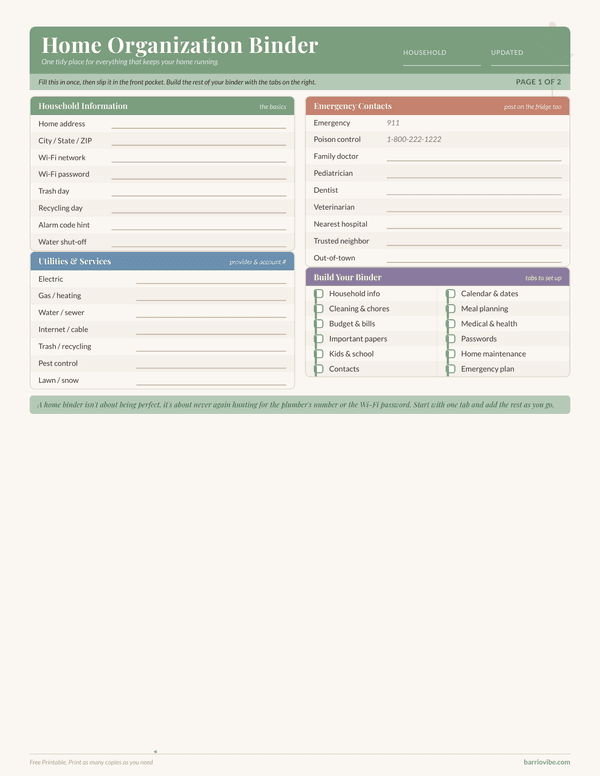
Home Organization Binder Set, Free Printable
A free printable home organization binder set with a household information sheet, emergency contacts, important dates, and a monthly zone and chore planner to keep everything your home needs in one tidy place.
How do you keep bins from becoming clutter magnets?
Label everything and give every bin a firm limit, those two habits are what separate a real system from a prettier stash. An unlabeled bin becomes a junk drawer within a month, because when anything can go in, everything eventually does. A label forces the decision at the door: if it does not match the label, it does not go in. Set a "one bin, one category" rule, and, just as important, treat a full bin as a signal to edit, not to buy a second one. A basic label maker or a sheet of printable labels makes the whole system look intentional and, more usefully, keeps everyone else in the house returning things to the right place instead of guessing. Finally, run a five-minute bin reset on a regular rhythm, Sunday works well, pulling out whatever drifted in over the week and returning it to its real home. Involve the rest of the household here too: when the label is clear and the limit is obvious, kids and partners can put things back without asking you where they go. Bins do not fail because they are the wrong bins; they fail when nothing guards what goes inside them.
Clear bins vs. baskets, which should you use where?
Use clear bins where finding things fast matters, and baskets where the room needs to look calm. Clear plastic wins in working spaces, pantries, cabinets, craft and hobby storage, the garage, because you can see the contents without opening anything, which means you actually use what you own instead of forgetting it exists behind a lid. The trade-off is that clear bins show their contents, so a wall of them can read as busy in a space meant for relaxing. Woven, fabric, and solid baskets are the opposite: they hide visual clutter and add warmth, which is why they suit open shelving, entryways, bedrooms, and coffee-table storage. The simple guideline is visibility in back-of-house spaces and concealment in the rooms you unwind in. Many homes happily run both, clear bins inside the closet, a handsome basket on the open shelf below. Match the container to the job the space is doing.
How do you plan a whole-home bin system without overbuying?
Plan on paper before you buy anything, a written inventory is the cheapest way to avoid a closet full of unused containers. Walk each room, note the spots that frustrate you, measure the shelves, and list what genuinely needs containing. Mapping your home organization bins this way turns a vague "I need more storage" into a specific, finite shopping list you can actually finish. Only then make a shopping list, and buy for one zone at a time so you can see how a style performs before you commit to it house-wide. Declutter first, too: there is no sense buying bins to store things you will donate next month anyway. Our room-by-room decluttering checklist helps you clear each space before you contain it, and once your zones are set, these home organization hacks, room by room show how to keep each area working long term. Sketch the plan, shop the list, and resist the matching-set temptation until you know the sizes fit. A bin system that grows one zone at a time almost never gets overbought.
Home Organization Binder Set, Free Printable
A free printable home organization binder set with a household information sheet, emergency contacts, important dates, and a monthly zone and chore planner to keep everything your home needs in one tidy place.
Measure first, buy for one zone at a time, label everything, and let the plan, not the store display, decide what comes home with you. Do that, and your containers stop being a purchase you have to redo every spring and start being a system that holds. The best bins are simply the ones you keep using long after the novelty wears off.
Frequently Asked Questions
What is the best type of bin for organizing?
There is no single best bin, match it to the job. Use clear stackable bins where you need to see contents fast, open baskets for daily grab-and-go items, and lidded totes for seasonal storage. The best bin is one sized to fit your shelf's depth and height exactly.
Are clear bins or baskets better for organizing?
Use clear bins in working spaces like pantries, cabinets, and garages where finding things fast matters, since you can see contents without opening them. Use woven or fabric baskets in living rooms and bedrooms, where hiding visual clutter and adding warmth matters more than visibility.
How do I stop bins from becoming cluttered again?
Label every bin and give it a firm limit. A label forces a decision, if an item does not match the label, it does not go in. Treat a full bin as a signal to edit, not to buy another, and do a quick five-minute reset each week to remove anything that drifted in.
How many storage bins do I actually need?
Fewer than you think. Plan on paper first: walk each room, measure the shelves, and list only what genuinely needs containing. Buy for one zone at a time and stick to two or three repeated sizes so bins can be reused and swapped between rooms as your needs change.
Should I declutter before buying organizing bins?
Yes, always declutter first. Buying bins to store things you will donate next month just wastes money and space. Clear each area down to what you actually keep, then measure the space and choose containers to fit, never buy storage before you know what is going inside it.