Some links in this guide are affiliate links, if you buy through them we may earn a small commission at no extra cost to you. Here’s our disclosure.
Quick Answer
Grocery list meal planning means building both in one sitting: decide the week's meals first, then convert every recipe into a single shopping list grouped by store aisle, and check your pantry before you buy. The plan tells you what to purchase; the list guarantees you come home with complete meals, not loose parts.
You planned three dinners in your head on the way to the store, grabbed what looked good, and came home with two bags of ingredients that do not add up to a single finished meal. It happens to everyone. You buy the chicken but forget the second thing it needed, or you already had three cans of beans and now you have five. Midweek the plan falls apart, so you order takeout while fresh produce quietly wilts in the crisper drawer. Then Saturday you are back at the store for the third time this week, buying more of what you already forgot. The grocery run and the dinner decision get treated as two separate problems, made on two different days, in two different headspaces, and the gap between them is where money, time, and food quietly disappear. If your shopping trips never quite match what you actually cook, the issue is not willpower or a too-small budget. It is that your list and your meals were never actually built to work together in the first place, as one connected plan instead of two.
How do you pair a grocery list with meal planning?
Grocery list meal planning works by building both documents in one sitting: you decide the week's meals first, then translate every one of those meals into a single, itemized shopping list before you go anywhere near the store. The two are not separate chores, the list is simply the meal plan converted into things you can buy. Start by writing out five to seven dinners, plus any breakfasts and lunches that need real ingredients. Then read each recipe and add every component to your list, grouped by the section of the store where you will find it. Finally, cross-check your pantry and fridge so you only buy what you are actually missing rather than doubling up on staples you already own. Done this way, the plan tells you exactly what to purchase, and the list guarantees you come home with complete meals instead of a bag of loose parts. One connected system replaces two disconnected guesses, and the whole week gets noticeably easier.
Which should you make first, the meal plan or the grocery list?
Always build the meal plan first, then let it generate the grocery list. The list is the output; the meals are the input, and reversing that order is what breaks most kitchens. When people shop without a plan, they buy appealing individual items and hope the combinations appear later, which is exactly how you end up with ingredients that never quite become dinner. Do it the other way: decide Monday through Sunday first, choosing meals around what is already in your freezer, what is on sale that week, and how busy each evening actually looks. A slow Tuesday can handle a real recipe; a packed Thursday needs something you can make in fifteen minutes. Once the week is mapped, every line on your grocery list traces back to a specific meal, so nothing is impulse and nothing is forgotten. If you want a simple grid to sketch the week before you shop, our guide on how to meal plan for the week walks through the exact order, meal by meal.
How do you turn a week of meals into one organized grocery list?
Read each planned meal and write down every ingredient it needs, then sort those ingredients by the section of the store where you will find them. Grouping by aisle is the step most people skip, and it is the one that saves the most time and the most money, you shop each zone once, never backtrack across the store, and instantly spot duplicates before they land in the cart. It also makes the trip faster for anyone else you send in your place, because the list reads in the order the store is laid out. Here is a simple structure to sort your list into:
| Store section | What goes here |
|---|---|
| Produce | Fresh fruit, vegetables, herbs |
| Meat & seafood | Proteins for each planned dinner |
| Dairy & eggs | Milk, cheese, butter, yogurt |
| Pantry & canned | Grains, pasta, sauces, spices |
| Frozen | Vegetables, fruit, backup meals |
| Household | Paper goods, cleaning, refills |
Fill one column per section, then tally a rough running total as you go so there are no surprises at checkout. That by-aisle layout is exactly what this free printable is built around, with a spot beside each item for quantities and a budget column down the side.
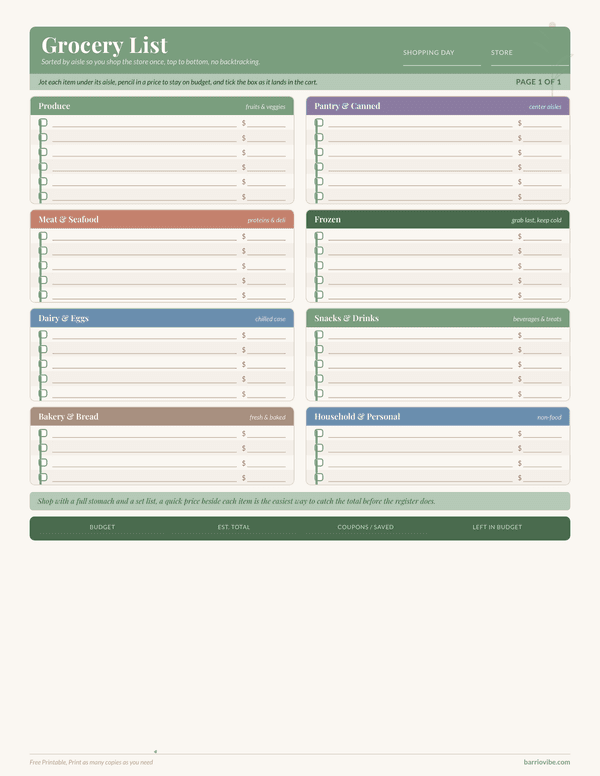
Grocery List Template (By Aisle), Free Printable
A free printable grocery list template organized by store aisle, produce, meat, dairy, pantry, frozen, and more, with a price column and budget tracker so you shop faster and spend less.
How does grocery list meal planning save money?
Pairing your list with a meal plan cuts spending in three specific ways, and together they add up fast. First, it eliminates impulse buys: a written list built from planned meals gives you a concrete reason to say no to everything else, so the cart stays lean and the total stays predictable. Second, it kills food waste, because every item you buy has an assigned meal, produce and proteins actually get used instead of forgotten, and Americans throw out a striking share of the food they purchase every year. Third, it prevents the expensive fallback of last-minute takeout, since dinner is already decided and the ingredients are already sitting in your fridge. You also stop buying duplicates of things you already own, because the pantry check is built right into the process. The result is a smaller weekly grocery total, fewer mid-week runs for the one thing you forgot, and far less money quietly rotting in the back of the fridge. For a deeper breakdown, our grocery list template that saves money shows how the by-aisle format trims the bill week after week.
What tools make grocery list meal planning easier?
The right setup removes the friction that makes people abandon the system by week two. Keep your planning tools in one spot: a printable meal plan and grocery list on the fridge, a pen right beside it, and your favorite recipes bookmarked so choosing meals takes minutes, not a whole evening. A magnetic dry-erase notepad on the refrigerator door is a small purchase that pays off quickly, anyone in the house can jot an item the moment it runs low, so your list half-writes itself before planning day even arrives. Keep a running "staples we always need" reference alongside it so restocking basics like eggs, oil, and pasta never gets forgotten. And do a quick fridge-and-pantry scan right before you write the list, ideally with your bins and shelves organized enough that you can actually see what you already have. The goal is to make the weekly plan take about fifteen minutes, because a modest system you can sustain always beats a perfect one you quit by February.
How do you keep grocery list meal planning going every week?
Attach it to a fixed time and keep the process short. The households that stick with meal planning treat it like a standing appointment, same day, same fifteen minutes, usually the evening before the big weekly shop. Anchor it to something you already do, like Sunday morning coffee, so it happens without needing a decision or a burst of motivation. Reuse a template instead of starting from scratch each week; a repeatable format means you are just filling in blanks. Rotate a short list of reliable go-to meals so you are never staring at an empty plan, and only add one or two new recipes at a time so cooking stays low-stress. When a week goes sideways, do not scrap the whole system. Just shop from a lighter plan and pick it back up next week.
Grocery List Template (By Aisle), Free Printable
A free printable grocery list template organized by store aisle, produce, meat, dairy, pantry, frozen, and more, with a price column and budget tracker so you shop faster and spend less.
Keep the plan and the list together, build them in one short sitting, and let the two do the deciding for you. Print a copy, stick it on the fridge, and check off items as you shop. Consistency, not perfection, is what turns this into the simple way your kitchen runs.
Frequently Asked Questions
Should I make my meal plan or grocery list first?
Always make the meal plan first, then build the grocery list from it. The list is the output of your meals, not a separate guess. Deciding dinners first means every item you buy traces back to a specific meal, so nothing is impulse and nothing gets forgotten at the store.
How do I organize a grocery list by aisle?
Read each planned meal, write down every ingredient, then sort those items into store sections: produce, meat and seafood, dairy and eggs, pantry and canned, frozen, and household. Shopping one zone at a time stops backtracking, reveals duplicates before they hit the cart, and makes the whole trip faster.
How does meal planning with a grocery list save money?
It cuts spending three ways: a written list from planned meals eliminates impulse buys, assigning every item to a meal prevents food waste, and having dinner decided avoids costly last-minute takeout. Building a pantry check into the process also stops you from buying duplicates you already own.
How many meals should I plan for a week?
Plan five to seven dinners plus any breakfasts and lunches that need real ingredients. Leave a night or two flexible for leftovers or an easy backup meal, so a busy evening does not derail the whole plan. Rotate a short list of reliable favorites to keep planning quick.
Do I have to print a new grocery list every week?
No. You can slip one printed copy into a sheet protector and reuse it with a dry-erase marker each week, or reprint a fresh sheet if you like starting clean. Either way, keeping the same by-aisle template means you fill in blanks instead of rebuilding the list from scratch.