
Some links in this guide are affiliate links, if you buy through them we may earn a small commission at no extra cost to you. Here’s our disclosure.
Quick Answer
For closet organization, shoes work best off the floor and sorted by wear frequency, not color. Keep everyday pairs at eye level, push seasonal and occasion shoes to high or low zones, and give each pair a defined slot, a cubby, shelf, or clear box, so putting them back is effortless.
There is a pile by the front door again. Flats kicked off toe-to-heel, one sneaker missing its match, the boots someone stepped out of in October still slumped in the corner. Inside the closet it is no better, shoes stacked two deep on the floor, heels toppling into flats, and the pair you actually want buried under three you never wear. Every morning turns into a small excavation, and every time company comes over you shove the whole heap somewhere and hope no one opens that door. It is not that you own too many shoes, exactly. It is that they have no home, no system that tells each pair where to go and makes putting them back easier than dropping them wherever you stand. That missing system is the whole problem, and it is a fixable one.
What's the best way to organize shoes in a closet?
The best closet organization shoes strategy is simple: get every pair off the floor and sort them by how often you wear them, not by color or style. Reserve the easiest-to-reach space, eye level and just below, for the five or six pairs you actually put on each week. Everyday sneakers, work flats, and go-to boots belong here. Push occasion shoes, heels, and anything seasonal to the higher or lower zones. Then give each pair a defined spot: a cubby, a shelf slot, or a clear box, so returning a shoe is a one-second decision instead of a toss onto a pile. The single biggest win is vertical space. Floors invite heaps; shelves, over-door racks, and stacked cubbies turn the same square footage into three or four usable layers. Once frequency drives the layout, the shoes you reach for daily are always the easiest ones to grab.
How do you organize shoes in a small closet or entryway?
In a tight closet or a shared entryway, go vertical and go clear. Wall and floor space is scarce, so use the height you have: a slim over-the-door shoe organizer holds ten to twelve pairs on the back of the closet or bedroom door without touching your floor at all. A narrow leaning shoe ladder or a stackable two-tier rack does the same near an entry. Keep only in-season, in-rotation pairs at the entry point, usually one or two per person, and store the rest elsewhere so the landing zone never overflows. For entryways with kids, a low open bin or a single cubby per child works better than any rack, because the goal is a target so easy that a five-year-old hits it. If you want a fuller room reset around that closet, our small closet organization ideas show how to squeeze every inch before you add a single shoe.
What are the best shoe storage options for a closet?
The right shoe storage depends on your space and the shoe type, so match the tool to the pair. Here is how the common options compare:
| Storage option | Best for | Holds | Watch out for |
|---|---|---|---|
| Clear stackable boxes | Heels, seasonal, delicate pairs | 1 pair each | Costs add up for big collections |
| Open cubby shelf | Everyday sneakers, flats | 8-16 pairs | Dust on open shelves |
| Over-the-door rack | Small closets, flats, sandals | 10-12 pairs | Bulky boots won't fit |
| Leaning shoe ladder | Entryways, tight corners | 9-12 pairs | Not for very tall boots |
| Under-bed rolling bin | Off-season storage | 12+ pairs | Out of sight, easy to forget |
Start with the pairs causing the most daily friction and solve those first. You rarely need one system for the whole collection, most closets end up with a mix, like open cubbies for daily shoes and clear boxes stacked above for the ones you wear twice a year.
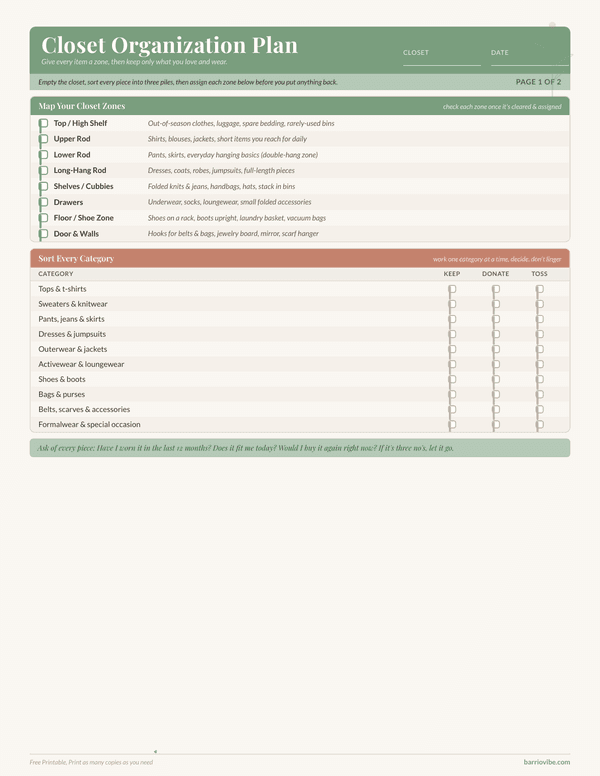
Closet Organization Plan + Labels, Free Printable
A free printable closet organization plan that maps every zone of your closet, walks you through a keep/donate/toss capsule declutter, and includes cut-out shelf and bin labels plus a weekly reset routine.
How should you store shoes you don't wear every day?
Store off-season and occasion shoes in a contained, out-of-the-way spot, but label them so "out of the way" never becomes "lost." Boots, sandals, and formal heels do not deserve prime real estate for the nine months you are not wearing them. Move them into lidded clear boxes or a labeled under-bed bin, and stash them up high, under the bed, or at the back of the closet. Before they go in, clean and fully dry each pair; leather especially will crack or grow mildew if you box it damp. Stuff boots with rolled paper or boot shapers so they hold their form and do not fold over on themselves. Slip a silica packet or a cedar block into each box to fight moisture and odor. When the season flips, you simply swap the bins, the boots come forward, the sandals go back, and your everyday zone never gets crowded by shoes you are not reaching for.
How do you keep your shoes organized once they're sorted?
Keeping shoes organized comes down to two habits: one home per pair, and a quick reset built into your day. The system only holds if every shoe has an obvious spot and putting it back is nearly effortless, that is the whole reason to keep daily pairs at eye level and give kids a bin instead of a rack. Do a ten-second sweep each evening, returning any strays from the floor to their slot before they multiply. A few tools make it stick: a stack of clear stackable shoe bins keeps pairs visible and dust-free so you never dig, and a simple label maker turns off-season boxes into a system anyone in the house can follow. Twice a year, when you swap seasonal bins, pull anything you did not wear all season and set it aside to donate. That rhythm, daily reset plus seasonal edit, is what keeps the closet from sliding back into a pile.
How do you declutter shoes before you organize them?
Always declutter before you buy a single bin, because organizing shoes you never wear just wastes the storage you paid for. Pull every pair out into one spot, seeing the full collection at once is what makes the excess obvious. Then sort fast into three groups: keep, donate, and toss. Toss anything broken, painfully uncomfortable, or worn past repair; no bin rescues a shoe that hurts. Donate the pairs in good shape that you have not worn in a year, including the "someday" heels and the impulse buys still stiff with newness. Be honest about duplicates, you do not need four pairs of black flats. What remains is your real collection, and now you can size your storage to it instead of to an aspirational number. For a deeper closet purge that goes beyond shoes, pair this with our closet organization guide and clear the whole space in one pass.
Closet Organization Plan + Labels, Free Printable
A free printable closet organization plan that maps every zone of your closet, walks you through a keep/donate/toss capsule declutter, and includes cut-out shelf and bin labels plus a weekly reset routine.
Print the plan, map out your zones, and give every pair a home. A closet you can actually see into starts with one honest sort and one shelf at a time.
Frequently Asked Questions
How do you organize a lot of shoes in a small closet?
Go vertical and keep only in-rotation pairs at eye level. Use an over-the-door rack, stacked cubbies, or a leaning shoe ladder to add layers, and move off-season shoes into labeled clear boxes stored up high or under the bed so the daily zone never overflows.
Should you store shoes with or without boxes?
Clear boxes are best for heels, delicate, and seasonal pairs because they stack, protect from dust, and keep shoes visible. Everyday sneakers and flats do better on open cubby shelves for grab-and-go access. Most closets use a mix of both depending on how often each pair is worn.
How do you organize shoes by the front door?
Keep only one or two current pairs per person at the entry and store the rest elsewhere. A low open bin or a single cubby per child beats a rack, because an easy target is what keeps shoes off the floor. Add a small tray for wet or muddy pairs.
How should you store seasonal shoes you're not wearing?
Clean and fully dry each pair first, then store them in lidded clear boxes or a labeled under-bed bin up high or at the back of the closet. Stuff boots with paper to hold their shape, and add a silica packet or cedar block to fight moisture and odor.
What is the best way to keep shoes organized long-term?
Give every pair one obvious home and do a ten-second nightly sweep to return strays before they pile up. Keep daily shoes easiest to reach, label seasonal boxes so anyone can follow the system, and twice a year donate anything you did not wear that season.