Some links in this guide are affiliate links, if you buy through them we may earn a small commission at no extra cost to you. Here’s our disclosure.
Quick Answer
The best bedroom organization tips for clutter-free surfaces are simple: give each surface one defined job, corral small items in a single tray, keep paper out of the room, and run a two-minute nightly reset. Store everything else in a drawer or another room so surfaces stay clear on their own.
You made the bed, and the room still looks messy. It's the nightstand, a water glass, three hair ties, a phone charger, two books you're not reading, and a receipt from last Tuesday. The dresser top has quietly become a landing strip for jewelry, loose change, and mail that never made it back downstairs. Every flat surface in the bedroom has turned into a shelf for things that don't belong there, and no amount of straightening the duvet fixes it. You wipe a surface clear on Sunday and by Wednesday it's full again, because the stuff always drifts back to the nearest open spot. Worse, this is the first thing you see in the morning and the last thing at night, so the visual noise follows you into sleep and back out of it. A cluttered nightstand quietly raises the mental load in the one room that's supposed to help you unwind, and it makes the whole space feel behind before the day even starts. If your bedroom feels cluttered no matter how often you tidy, the surfaces are almost always the real culprit.
What are the best bedroom organization tips for keeping surfaces clear?
The best bedroom organization tips all start with one rule: give every flat surface a single, defined job, or it will quietly become a catch-all for everything else. A nightstand is for what you use in bed, a lamp, a book, water, maybe glasses. A dresser top is for a lamp and one tray, not a growing mail pile. When a surface has a clear purpose, anything that doesn't fit that purpose has an obvious "no," and clutter loses its landing spot. The second rule is to give the homeless items a home somewhere else, a drawer, a bin, a hook by the door. Clutter on surfaces is almost always stuff without a designated place. Clear the surface, assign each item a real home, and the room stays calm on its own. A third habit locks it in: put things away in one motion instead of setting them down "for now," since every temporary landing spot becomes a permanent pile. These moves, purpose per surface, home per item, one-touch put-away, do more than any single tidying marathon ever will.
Why do nightstands and dressers collect clutter so fast?
Nightstands and dressers collect clutter fast because they're the most convenient horizontal surfaces in the room, and clutter always flows to the path of least resistance. You walk in at the end of the day with your phone, earrings, pocket change, and a hair tie, and the nearest flat surface catches all of it, because putting things away takes a few extra steps you're too tired to take. Most bedroom organization tips focus on buying more storage, but the real reason surfaces fill up is convenience, not a shortage of bins. Bedrooms also tend to be the last room anyone organizes; guests never see it, so it becomes the drop zone for decisions you're avoiding, the mending pile, the returns, the "I'll deal with it later" mail. And because you see the mess every single day, you stop noticing it, so it never triggers the urge to clear it. Reduce the steps to put things away, and the nearest surface stops being the default.
How do you organize a nightstand so it stays clear?
Organize a nightstand by keeping only what you use in bed on top and moving everything else into the drawer or off it entirely. The surface should hold four things at most:
- A lamp
- Whatever you're currently reading
- A small dish or tray for glasses and jewelry
- A glass of water
Everything else, chargers, hand cream, medications, headphones, goes inside, where a slim drawer organizer or a couple of small dividers keeps it from becoming a junk drawer. Corralling the little stuff in a tray is the single move that makes a nightstand look intentional instead of chaotic, because loose items read as mess even when there aren't many of them. Charge your phone across the room if you can; it clears the biggest daily offender and helps you sleep better too. Then do a ten-second sweep each night, glass to the kitchen, anything stray into the drawer, and the surface stays clear.
What's the best way to keep a dresser top clutter-free?
Keep a dresser top clutter-free by limiting it to a few intentional items and giving everything else a home in a drawer or another room. A dresser top works best with a maximum of three zones: something decorative (a plant, a framed photo, or a small lamp), one catch-all tray for the things you empty from your pockets, and a jewelry spot. Mail, receipts, and paperwork should never live here, they belong in a designated inbox elsewhere in the house, because paper multiplies faster than any other kind of clutter. A wall hook or a small shelf nearby can absorb bags, belts, or a robe so they never land on the dresser at all. One of the most reliable bedroom organization tips is the one-tray limit: when the tray is full, that's a signal to put things away, not permission to start a second pile. If you want a room-wide plan that maps every zone, surfaces, closet, nightstand, and under-bed, grab the free printable below and work through it one zone at a time.
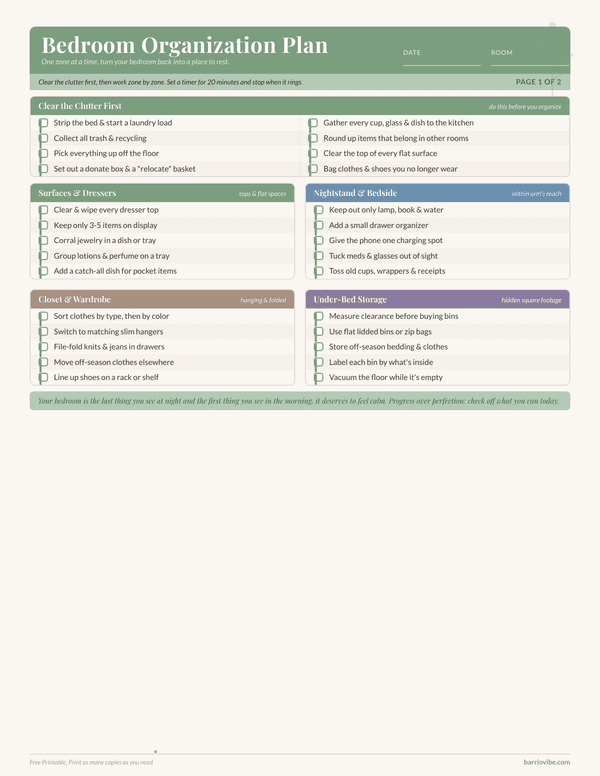
Bedroom Organization Plan, Free Printable
A free printable bedroom organization plan with zone-by-zone checklists for surfaces, nightstand, closet, drawers, and under-bed storage, plus nightly and weekly reset routines to keep your bedroom tidy for good.
What's a two-minute surface reset that keeps the bedroom tidy?
A two-minute surface reset done nightly is what keeps a bedroom tidy without ever needing a big cleanup. The reset is simple: walk the room and clear every flat surface back to its defined purpose before bed. Return the water glass, drop stray items into their drawer or tray, and carry anything that belongs in another room to the door to take with you on the way out. Two minutes, same time every night, and the surfaces never build up enough to feel overwhelming. It works because you're maintaining a clear surface instead of excavating a cluttered one, the job stays small forever. Here's the surface-by-surface breakdown of what stays out versus what gets put away:
| Surface | Keep out | Relocate or store |
|---|---|---|
| Nightstand | Lamp, current book, small tray, water | Chargers, meds, old glasses, receipts |
| Dresser top | One decor item, catch-all tray, jewelry dish | Mail, paperwork, laundry, loose change |
| Bench or chair | Nothing, or one folded throw | The "clothes chair" pile, hang or hamper |
| Windowsill or shelf | A plant or framed photo | Random collectibles and dust-catchers |
Run this list once and the nightly reset quickly becomes automatic.
How do you keep bedroom surfaces clutter-free long-term?
Keeping bedroom surfaces clutter-free long-term comes down to maintaining systems, not summoning willpower. The bedroom organization tips that actually last are the low-friction ones: a tray on the dresser so small items have an instant home, a nightly two-minute reset anchored to brushing your teeth, and a firm rule that no paper enters the bedroom. Once a month, do a slightly deeper pass:
- Empty and re-sort the nightstand drawer
- Edit the jewelry dish and catch-all tray down to what you actually use
- Return anything that's migrated in from other rooms
- Toss dead pens, old receipts, and expired medications
It also helps to treat the bedroom as the room you reset first, not last, so it stops being the household's dumping ground. If you're tackling the whole space, our bedroom organization ideas and full room plan walk through every zone, and these bedroom organization hacks add quick wins for small rooms. Print the plan, keep it on the dresser, and let the system hold the room together for you.
Bedroom Organization Plan, Free Printable
A free printable bedroom organization plan with zone-by-zone checklists for surfaces, nightstand, closet, drawers, and under-bed storage, plus nightly and weekly reset routines to keep your bedroom tidy for good.
A calm bedroom starts with clear surfaces. Clear them once, give every item a real home, and a two-minute nightly reset will keep them that way.
Frequently Asked Questions
Why does my nightstand always get cluttered?
A nightstand clutters because it's the most convenient surface in the room, so anything in your hands at the end of the day lands there. Give it one defined job, lamp, book, water, and a small tray, and put everything else in the drawer so there's no room for pileups.
What should you keep on a nightstand?
Keep only what you use in bed: a lamp, whatever you're currently reading, a glass of water, and a small dish or tray for glasses and jewelry. Chargers, medications, and hand cream belong inside the drawer, ideally in a divider so it doesn't become a junk drawer.
How do I keep my dresser top clutter-free?
Limit the dresser top to three zones: one decorative item, a single catch-all tray, and a jewelry dish. Never let mail or paperwork live there, since paper multiplies fastest. Use the one-tray limit, when the tray is full, it's a signal to put things away, not to start a second pile.
What is the two-minute bedroom reset?
The two-minute reset is a nightly walk-through where you clear every flat surface back to its defined purpose before bed, return the water glass, drop stray items into their tray or drawer, and carry anything from another room to the door. Done daily, surfaces never build up enough to overwhelm you.
How do you keep bedroom surfaces clear long-term?
Rely on low-friction systems, not willpower: a catch-all tray, a nightly two-minute reset anchored to brushing your teeth, and a no-paper rule for the bedroom. Once a month, do a deeper pass on the nightstand drawer and jewelry dish, and reset the bedroom first rather than last.