Some links in this guide are affiliate links, if you buy through them we may earn a small commission at no extra cost to you. Here’s our disclosure.
Quick Answer
A daily home cleaning routine is a short, fixed list of tasks you repeat every day, dishes, counters, beds, a quick bathroom swipe, and a 10-minute tidy, done in about 15 minutes. Working top to bottom keeps small messes from snowballing, so the weekly deep jobs stay manageable.
You wipe the counters before bed, and by the time the coffee has brewed the next morning there are crumbs on them again. The sink fills up, the entryway collects shoes and mail, and somehow the laundry basket is never actually empty. You are not lazy, you are cleaning constantly, and yet the house never feels done. That is the frustrating part: the effort is real, but it disappears into a hundred little tasks with no order to them, so nothing ever stays finished. When there is no set rhythm, every mess competes for your attention at once, and you end up reacting to whatever is loudest instead of quietly staying ahead of it. The problem is rarely that you need to work harder or care more. It is that the daily work has no shape, no start, no finish, and no way to know when you are allowed to stop.
What is a good daily home cleaning routine?
A good home cleaning routine is a short, fixed set of small tasks you repeat every single day so mess never gets a head start. Instead of deep-cleaning anything, the daily routine handles the fast-moving messes, dishes, counters, beds, and clutter, that pile up overnight if you ignore them. The whole point is prevention, not perfection: five or six tiny tasks, done in the same order at roughly the same time, keep your home from ever reaching the overwhelming stage. Because the list is short and always the same, it eventually runs on autopilot, the way brushing your teeth does. A home cleaning routine works precisely because it is unambitious. You are not trying to clean the entire house each day, you are simply resetting the surfaces that touch daily life, so the bigger weekly jobs stay small and the house feels calm instead of chaotic. Think of it as the difference between paying a small bill on time and letting it turn into debt: a few minutes now saves you an exhausting reckoning later.
What should be on your daily cleaning checklist?
Your daily cleaning checklist should cover only the messes that snowball within 24 hours, everything else can wait for a weekly focus day. In practice that means a tight list of high-traffic resets you can do without thinking. Anything that does not visibly worsen overnight, like baseboards, windows, or the oven, does not belong on the daily list at all. Here is the core daily routine this free printable checklist follows:
| Daily task | Why it earns a daily spot |
|---|---|
| Wash or load the dishes | An empty sink resets the whole kitchen |
| Wipe kitchen counters | Crumbs and spills attract pests and stains |
| Make the beds | Instantly makes bedrooms look tidy |
| Quick bathroom swipe | Sink and toilet stay fresh in 60 seconds |
| 10-minute clutter tidy | Returns stray items to their homes |
| Wipe the highest-use surface | Table, island, or entry catch-all |
Keep the list this short on purpose. A daily checklist you can finish is worth far more than an ambitious one you abandon by Wednesday. If your household is busy, print a copy for each person old enough to help and let everyone own a task or two, shared upkeep is what keeps the daily load genuinely light.
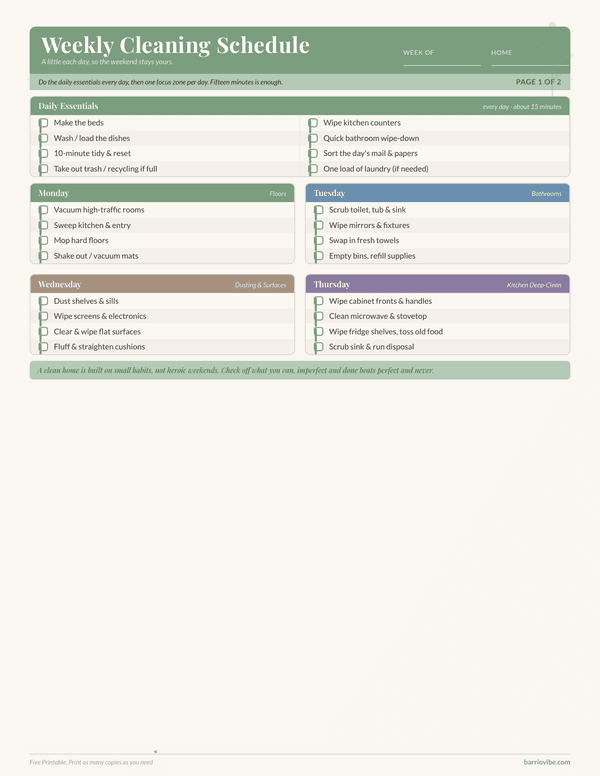
Weekly Cleaning Schedule, Free Printable
A realistic weekly cleaning schedule: a 15-minute daily-essentials checklist plus one focus zone per day, Monday through Sunday, with a weekly reset and progress summary. Print on standard letter paper.
How long should a daily cleaning routine take?
A daily home cleaning routine should take about 15 minutes, no more. The daily reset is not meant to deep-clean anything; it exists only to stop small messes from becoming big ones, and 15 focused minutes covers every essential on the list. The trick that makes it work is a timer. Setting a timer does two jobs at once: it keeps you moving quickly from task to task instead of getting lost polishing one spot, and it gives you explicit permission to stop when it goes off. Most people badly overestimate how long these little tasks take, loading the dishwasher and wiping counters is honestly three or four minutes, and dread them far longer than they actually last. When the 15-minute reset becomes automatic, running at the same point in your day every day, the mess never accumulates enough to demand a longer session. If 15 minutes feels tight at first, it usually means the house is still catching up from before you had a routine, give it a week and the same list will start finishing with time to spare. You can also split the reset in two: a five-minute morning pass for beds and dishes, and a ten-minute evening pass for counters, clutter, and a bathroom swipe. Short and consistent always beats long and occasional.
What order should you clean in each day?
Work from top to bottom and from dry to wet, in that order, and the whole routine goes faster with less backtracking. Start by clearing clutter, because you cannot clean a surface buried under stuff. Next, dust or wipe from high points down to low ones, so anything you knock loose falls onto surfaces you have not cleaned yet. Then handle wet tasks, the sink, the counters, the bathroom, and finish with the floors last, so every crumb and speck you dislodged along the way gets swept or vacuumed up in one final pass. Following a set sequence matters as much as the tasks themselves:
- Declutter, put stray items back where they belong.
- Dust and wipe, high surfaces down to low ones.
- Wet tasks, sink, counters, bathroom fixtures.
- Floors last, sweep or vacuum up everything you dropped.
Do it in this order every day and the routine stops feeling like guesswork. The sequence also stops you from redoing work, nothing is more discouraging than mopping a floor and then knocking dust onto it from a shelf you dust afterward. Follow the order and each task protects the one before it.
How do you build a daily cleaning routine that actually sticks?
The routines that last are the ones you attach to a habit you already have, so they never depend on willpower. Anchor your 15-minute reset to a fixed daily event, right after breakfast, or while the coffee brews, and it happens automatically, no decision required. Remove friction by keeping supplies where you use them: a small caddy with an all-purpose spray and a stack of color-coded microfiber cloths under each sink means you never waste time hunting for tools, and quality microfiber cloths grab dust and dry streak-free far better than paper towels. Use a timer so cleaning has a clear finish line. Most importantly, when you miss a day, and you will, do not try to make it up or restart. Just do today's reset and move on. A cleaning routine is a guide, not a test you can fail. Four good days out of seven still leaves your home dramatically calmer than an all-or-nothing plan that collapses the first busy week.
Daily cleaning routine vs. weekly cleaning schedule, what's the difference?
A daily routine is your quick maintenance reset; a weekly cleaning schedule is where the deeper recurring jobs get done. The daily 15-minute list keeps surfaces livable, dishes, counters, beds, a fast tidy, while the weekly schedule assigns bigger tasks like floors, bathrooms, dusting, and laundry to specific days so no single day is overwhelming. You need both, and they fit together neatly: run the daily reset every day, and layer one weekly focus zone on top of it. If you want the day-by-day structure for those larger jobs, our weekly cleaning schedule printable maps floors to Monday, bathrooms to Tuesday, and so on through a Sunday reset. And if your days are already stretched thin, this cleaning schedule for working moms shows how to make the whole system survive a packed calendar. The daily routine handles the small stuff; the weekly schedule handles the rest.
Print the checklist, keep it somewhere you'll actually see it, and check off what you can each day. A calm, consistently tidy home is not built in one heroic weekend, it is built 15 quiet minutes at a time, one ordinary day after another, until the routine simply becomes the way your home runs.
Weekly Cleaning Schedule, Free Printable
A realistic weekly cleaning schedule: a 15-minute daily-essentials checklist plus one focus zone per day, Monday through Sunday, with a weekly reset and progress summary. Print on standard letter paper.
Frequently Asked Questions
What is the 15-minute daily cleaning routine?
It is a short, timed daily reset, loading dishes, wiping counters, making beds, a quick bathroom swipe, and a 10-minute tidy, done in about 15 minutes. The timer keeps you moving and lets you stop when it goes off, so small messes never snowball into big ones.
What should I clean every single day?
Only the messes that snowball within 24 hours: dishes, kitchen counters, beds, a fast bathroom swipe, and a quick clutter tidy. Skip anything that does not visibly worsen overnight, like baseboards, windows, or the oven, those belong on a weekly or monthly schedule instead.
In what order should I clean each day?
Work top to bottom and dry to wet: declutter first, then dust and wipe from high surfaces down to low, then handle wet tasks like the sink and bathroom, and finish with floors last so any crumbs or dust you dislodged get swept up in the final pass.
How do I keep a daily cleaning routine from falling apart?
Anchor it to a habit you already have, like right after breakfast, and keep supplies where you use them. When you miss a day, just do today's reset instead of restarting the week. Four good days out of seven still leaves your home far calmer than an all-or-nothing plan.
What is the difference between a daily routine and a weekly cleaning schedule?
A daily routine is a 15-minute maintenance reset for surfaces that get messy fast. A weekly cleaning schedule assigns bigger recurring jobs, floors, bathrooms, dusting, laundry, to specific days. You run the daily routine every day and layer one weekly focus zone on top of it.